
The ear: a marvel of nature
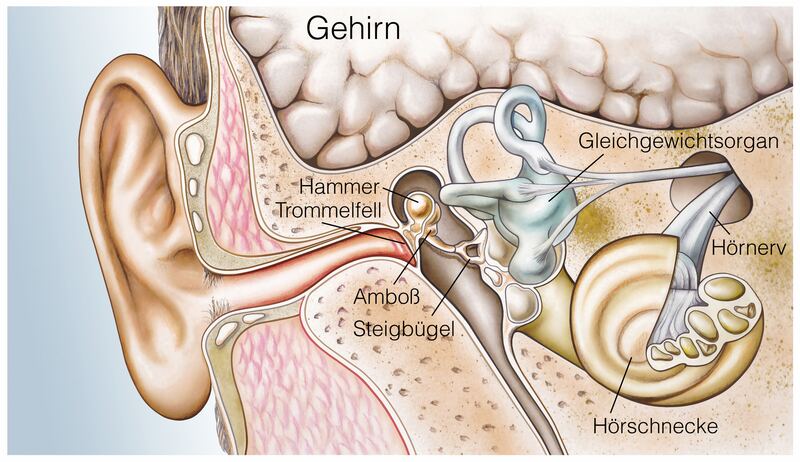
Our ear is a complex organ that gives us two important senses: hearing and balance. Without the function of our ears, our lives would be severely limited. In this text we explore the fascinating world of the ear and delve into the details of its three sections:
1. The outer ear
- Auricle and ear canal: the auricle catches sound waves and directs them into the ear canal, which is protected by earwax.
- Eardrum: the eardrum vibrates with the sound waves and passes them on.
2. The middle ear
- Ossicles: the malleus (hammer), incus (anvil) and stapes (stirrup) transmit the vibrations of the eardrum to the inner ear.
- Eustachian tube: the Eustachian tube connects the middle ear with the pharynx and equalises pressure.
3. The inner ear
- Cochlea: the cochlea is the sensory organ of hearing. It contains the basilar membrane with the hair cells, which convert the vibrations into electrical signals.
- Organ of balance: the organ of balance is also located in the inner ear and helps us perceive our position and movement in space.
Interplay of the organs
The three sections of the ear work closely together to convert sound waves into electrical signals, which our brain interprets as hearing and balance.
Impairment of hearing
Various factors can impair hearing, such as noise, infections or age-related wear.
Conditions of the ear
Conditions such as middle-ear infection, tinnitus or sudden hearing loss can severely impair hearing and quality of life.
Conclusion
The ear is a wonder of nature that opens up the world of sound and movement to us. It is important to protect our ears and to consult a physician if any impairment occurs.
For hearing disorders, sudden hearing loss or tinnitus, we advise you in our ENT services in Leipzig.
Last reviewed: July 2026